About University
About University
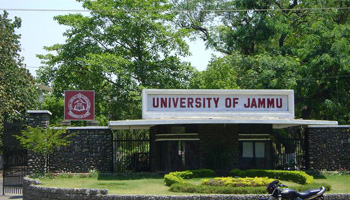
Cradled in the lap of mountains at the foothills of auspicious Trikuta, besides the river Tawi at an altitude of 1030 ft. is Jammu. This 'city of temples' has many places...
Cradled in the lap of mountains at the foothills of auspicious Trikuta, besides the river Tawi at an altitude of 1030 ft. is Jammu. This 'city of temples' has many places...


One of the emerging challenges faced by any higher educational institution is the development, application and maintenance of quality...
Two-Days’ International Seminar on “Dynamics of Democracy, Civil Society and Governance in South Asia” Concluded at University of Jammu
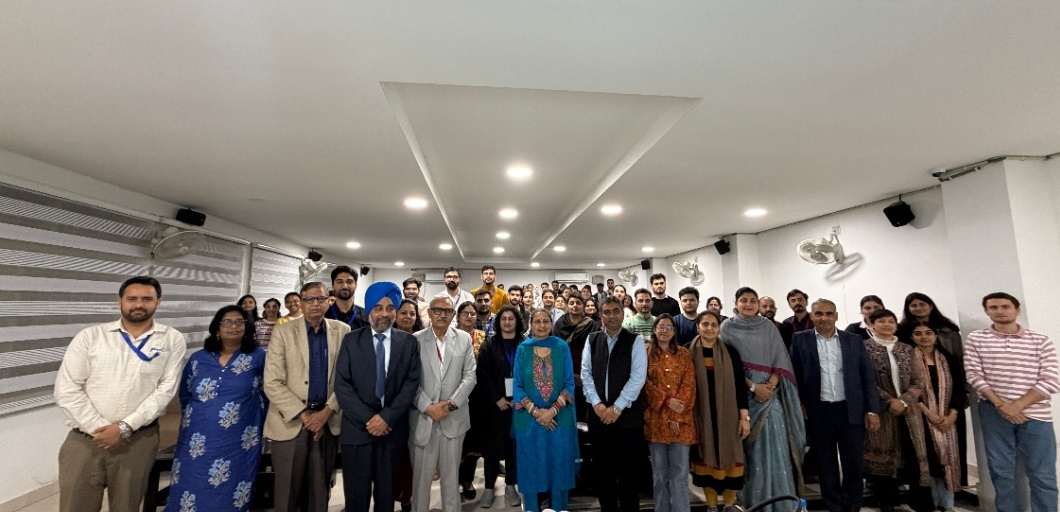
Jammu, February 25, 2026: The two-days’ International Seminar on “Dynamics of Democracy, Civil Society and Governance in South Asia” organized by the Department of Political Science, University of Jammu, Jammu concluded successfully on the evening of February 24, 2026, at the Seminar Hall of the Department of Environmental Sciences of the University. Prof. Baljit Singh Mann welcomed the delegates, speakers, research scholars and students in the valedictory session of the seminar.
Prof. Neelu Rohmetra, Dean Research Studies, University of Jammu, presided over the valedictory session. In her presidential address, she urged scholars and students to internalize democratic values in their everyday lives and grow into responsible citizens who uphold both their rights and duties with equal commitment. She stressed that learning must continue at every stage of life, as it enables individuals to achieve their goals and meaningfully contribute to a vibrant democracy, an engaged civil society, and accountable governance. She also congratulated the Department of Political Science for organizing a seminar on a subject of pressing contemporary relevance.
The valedictory address was delivered by Prof. Ajmer Singh Malik, Former Vice-Chancellor of Chaudhary Devi Lal University, Sirsa, Haryana. He appreciated the Department for organizing a timely and intellectually stimulating academic event. In his remarks, Prof. Malik underscored the true values of the liberal democratic political systems in the global politics and opined that South Asian region is containing very spectacular type of countries as these countries are sustaining democracy according to their values which is an altogether a challenging task owing to their diversities. Prof. Malik described the value of democratic political systems for human welfare and also explained the vital role of civil society that it can play in strengthening the governance across South Asia.
Prof. Karori Singh, Former Director, Centre for South Asian Studies, University of Rajasthan, Jaipur made the concluding observations of the seminar and highlighted the importance for such academic events for promotion and evaluation of good governance and adaptive policy-frameworks for governance in the South Asia.
Over the two days, more than 28 scholars from Indian and foreign universities and colleges presented their papers in both offline and virtual modes and participated in the deliberations and discussions on the issues raised in the different papers by the scholars. Dr. Seema Shekhawat from the University of North Florida, USA and Prof. Kazi S.M. Khasrul Alam Quddusi and Dr. Mahmudur Rehman from the University of Chittagong, Bangladesh; and Prof. Ambrish Dhaka from Jawaharlal Nehru University, New Delhi presented their papers through the online mode. Dr. Nisanka Sanjeewani Ariyarathne from the University of Ruhuna; Sri Lanka; Prof. A. Venkatraman from Veer Narmad South Gujarat University, Surat; Prof. Y. Pardhasaradhi from Osmania University, Hyderabad; Prof. Rajpal Budania from University of Allahabad, Paryagraj; Prof. Mathew Joseph C. from Jamia Millia Islamia, New Delhi; Prof. Amarjit S. Narang from Indira Gandhi National Open University, New Delhi; Dr. Dhananjay Tripathi from South Asian University, New Delhi; Dr. Vikas Sabharwal from University of Kurukshetra, Kurukshetra; Dr. Devender Singh, Dr. Gurvel Singh Malhi, Dr. Harbilas Singh, and Dr. Sharma Ritu Raj Kumar from Khalsa College, Amritsar; and Dr. Shaveta Choudhary, Dr. Mool Raj, Shalini Raina, Indu Bala Thakur, Nikita Chowdhary, Sukhwinder Kour, Vintee Kotwal, Bandeep Kour, Nisar Ahmed, Arvind Kumar, Nisha Sharma, Sakshi Sharma and Haroon Rather from University of Jammu presented their papers in the offline mode.
Prof. Rajpal Budania observed that ideological foundations, institutions, civil society, and political culture are the core pillars of democratic political systems and democratic processes—free elections, participation, and decentralization—remain essential for peace and stability in the region. Prof. Amarjit S. Narang reflected on the adoption of democracy in South Asia as an instrument for development, contrasting it with its evolutionary emergence in the West. He emphasized that genuine democracy requires commitment to liberty, equality, justice, and principles rather than personalities. Dr. Seema Shekhawat in her online presentation, highlighted the importance of Track III diplomacy and civil society engagement in fostering sustainable peace in a nuclearized South Asia, arguing for inclusive dialogue beyond formal state channels. Dr. Nisanka Sanjeewani Ariyarathne discussed the role of civil society in the promotion of democracy in Sri Lanka. Prof. A. Venkatraman argued that although constitutions have promised liberal democratic ideals, however, in practice, these are facing different types of challenges. Therefore, he suggested that an active civil society engagement, electoral participation, accountability, transparency, and a shift toward “good enough governance” focused on restructuring and effective service delivery are urgently needed. Prof. Kazi S.M. Khasrul Alam Quddusi, in his online presentation, examined the political crisis in Bangladesh following the 2025 exile of former Prime Minister Sheikh Hasina, pointing to institutional uncertainty and growing concerns over democratic centralization. In his virtual presentation, Dr. Mahmudur Rehman discussed tensions between majoritarian nationalism and plural identities in Bangladesh and Pakistan, underlining the challenges to democratic consolidation. Prof. Ambrish Dhaka also made online presentation in which he analyzed the Pashtun Tahafuz Movement (PTM) in Pakistan as a peaceful resistance movement that has faced securitization and repression, situating it within a broader regional trend of shrinking civic space. Dr. Dhananjay Tripathi and Dr. Vikas Sabharwal addressed youth-led political mobilizations in Nepal, highlighting generational disillusionment, constitutional controversies, and the growing role of digital platforms in shaping contemporary democratic contestations.
The seminar witnessed enthusiastic participation from faculty members, research scholars, and students of the University of Jammu and its affiliated colleges. The concluding session was attended by several faculty members, including Prof. Lalitsen Sharma, and Dr. Mool Raj, along with research scholars Neekita Choudhary, Vintee Kotwal, Bandeep Kour, Nisar Ahmed, Samiksha Raina, Avni Bhagat, and students of the Department, were also present.
Prof. Suneel Kumar presented the vote of thanks, expressing gratitude to the distinguished speakers, chairpersons, delegates, and the organizing committee for their valuable contributions. The proceedings of the seminar were conducted by Dr. Shaveta Chowdhary, who also presented the detailed report of the two-day International Seminar, highlighting the key deliberations, thematic discussions, and major outcomes of the academic sessions. The seminar concluded on a positive note with a collective resolve to continue academic dialogue and research collaboration on issues relating to democracy, civil society, and governance in South Asia, with the aim of generating meaningful, policy-relevant insights for the region.