About University
About University
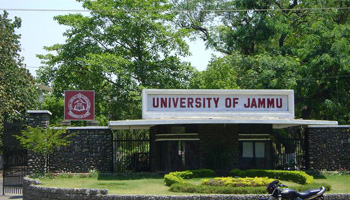
Cradled in the lap of mountains at the foothills of auspicious Trikuta, besides the river Tawi at an altitude of 1030 ft. is Jammu. This 'city of temples' has many places...

Cradled in the lap of mountains at the foothills of auspicious Trikuta, besides the river Tawi at an altitude of 1030 ft. is Jammu. This 'city of temples' has many places...



One of the emerging challenges faced by any higher educational institution is the development, application and maintenance of quality...
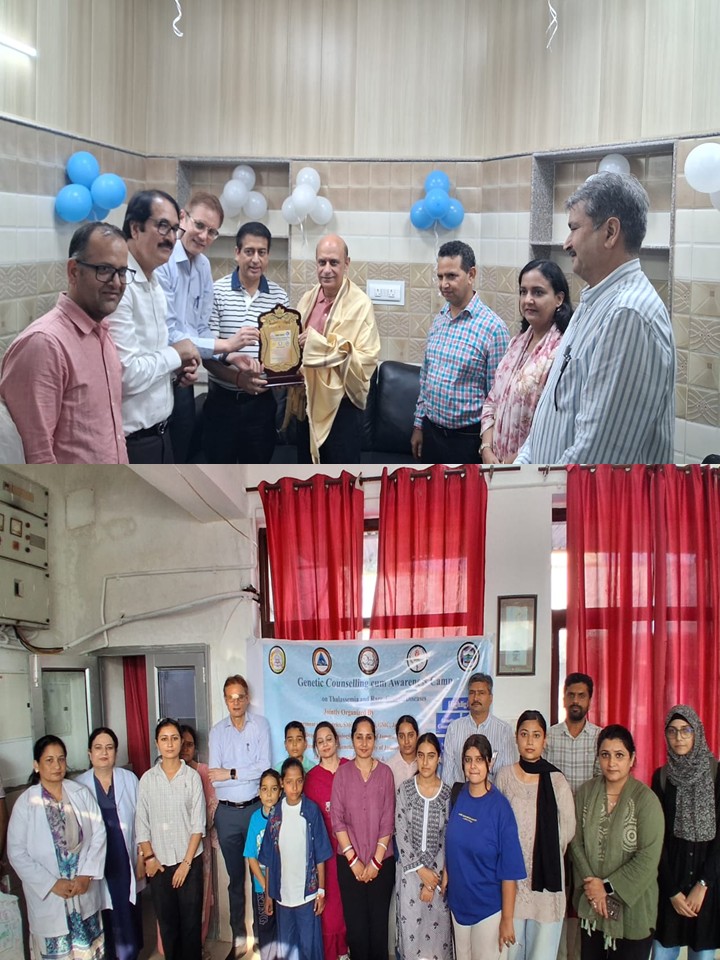
Jammu, September 25, 2026: A Genetic Counselling-cum-Awareness Camp on Thalassemia and Rare Genetic Diseases was organised at the Genetic Laboratory and Thalassemia Unit of SMGS Hospital, GMC Jammu, in collaboration with the University of Jammu, with the objective of strengthening awareness about genetic counselling, early identification and appropriate laboratory evaluation of individuals and families affected by thalassemia and rare genetic disorders.
The camp was organised under the Mission Programme in Pediatrics Rare Diseases, a research project funded by the Department of Biotechnology (DBT), Government of India, New Delhi. The programme was jointly organised by the Department of Pediatrics, GMC Jammu; Department of Zoology, University of Jammu; Institute of Human Genetics, University of Jammu; J&K Thalassemia Welfare Society; and IAP City Branch Jammu.
The camp was inaugurated by Dr. (Prof.) Ashutosh Gupta, Principal and Dean, GMC Jammu, who appreciated the initiative and highlighted the importance of strengthening awareness and genetic counselling for thalassemia and rare genetic diseases.
Er. Deep Raj Kanethia (JKAS), Administrator, Associated Hospital, GMC Jammu; Dr. Neha Sharma (JKAS), Administrative Officer, GMC Jammu; and Dr. Dara Singh, Medical Superintendent, SMGS Hospital, were present as special guests. They also appreciated the joint initiative of GMC Jammu and the University of Jammu to create awareness among the masses about genetic diseases.
The camp brought together healthcare professionals, geneticists, laboratory personnel, students and families affected by thalassemia and other inherited disorders. During the camp, 35 families were screened and 70 samples were obtained.
Dr. (Prof.) Sanjeev K. Digra, Professor and Head, Department of Pediatrics, GMC Jammu, and Dr. Parvinder Kumar, Associate Professor, Department of Zoology and Human Genetics, University of Jammu, sensitised the gathering about the importance of genetic testing and counselling for the management and prevention of thalassemia and also conducted the counselling session.
The programme focused on enhancing understanding among families regarding the hereditary nature of thalassemia and rare genetic diseases, the importance of carrier detection, genetic testing, reproductive counselling and appropriate follow-up. Direct interaction with affected families enabled healthcare professionals to address their concerns and provide information related to diagnosis, inheritance and future family planning.
The organisers emphasised the importance of a coordinated approach involving clinical care, genetic counselling, laboratory diagnosis, family screening and community awareness for improving the long-term management and prevention of inherited disorders.
The camp was conducted under the guidance and participation of Dr. (Prof.) Sanjeev K. Digra, Professor and Head, Department of Pediatrics, GMC Jammu and Co-Principal Investigator, Mission Programme in Pediatrics Rare Diseases; Dr. Mohd. Razaq; Dr. Anuj Bhatti; Dr. Ravi Parihar, Associate Professor, Department of Pediatrics, GMC Jammu; Dr. Sanjana Sharma, Associate Professor, Department of Pediatrics, GMC Jammu; Dr. Pooja Bharti, Assistant Professor, Department of Pediatrics, GMC Jammu; Dr. Ritu, Medical Officer, Department of Pediatrics, GMC Jammu; Prof. Seema Langer, Head, Department of Zoology; Prof. B. K. Bajaj, Coordinator, Institute of Human Genetics; Dr. Parvinder Kumar, Associate Professor, Department of Zoology, Deputy Coordinator, Institute of Human Genetics and Principal Investigator, Mission Programme in Pediatrics Rare Diseases; Dr. Md. Younis, Project Associate, Rare Genetic Diseases; Dr. Shikha Bharti, Project Associate, Rare Genetic Diseases; and research scholars Indu Bharti, Surbhi Pathania, Kulbir Singh, Ekta Jamwal and Sunderjot Kour.
Paramedical and supporting staff, including Sister Madhu, Sister Malti, Sister Harpreet, Sister Shabnam and Mr. Muzamil, also contributed to the conduct of the camp.
The programme concluded with continued emphasis on strengthening genetic services, family-centred counselling, collaborative research and awareness regarding thalassemia and rare genetic diseases in the region.