About University
About University
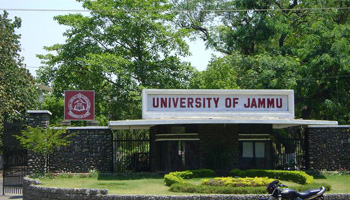
Cradled in the lap of mountains at the foothills of auspicious Trikuta, besides the river Tawi at an altitude of 1030 ft. is Jammu. This 'city of temples' has many places...
Cradled in the lap of mountains at the foothills of auspicious Trikuta, besides the river Tawi at an altitude of 1030 ft. is Jammu. This 'city of temples' has many places...


One of the emerging challenges faced by any higher educational institution is the development, application and maintenance of quality...
University of Jammu, NCB Jammu organise awareness session on “Say No to Drugs, Yes to Life - Drug Free India”
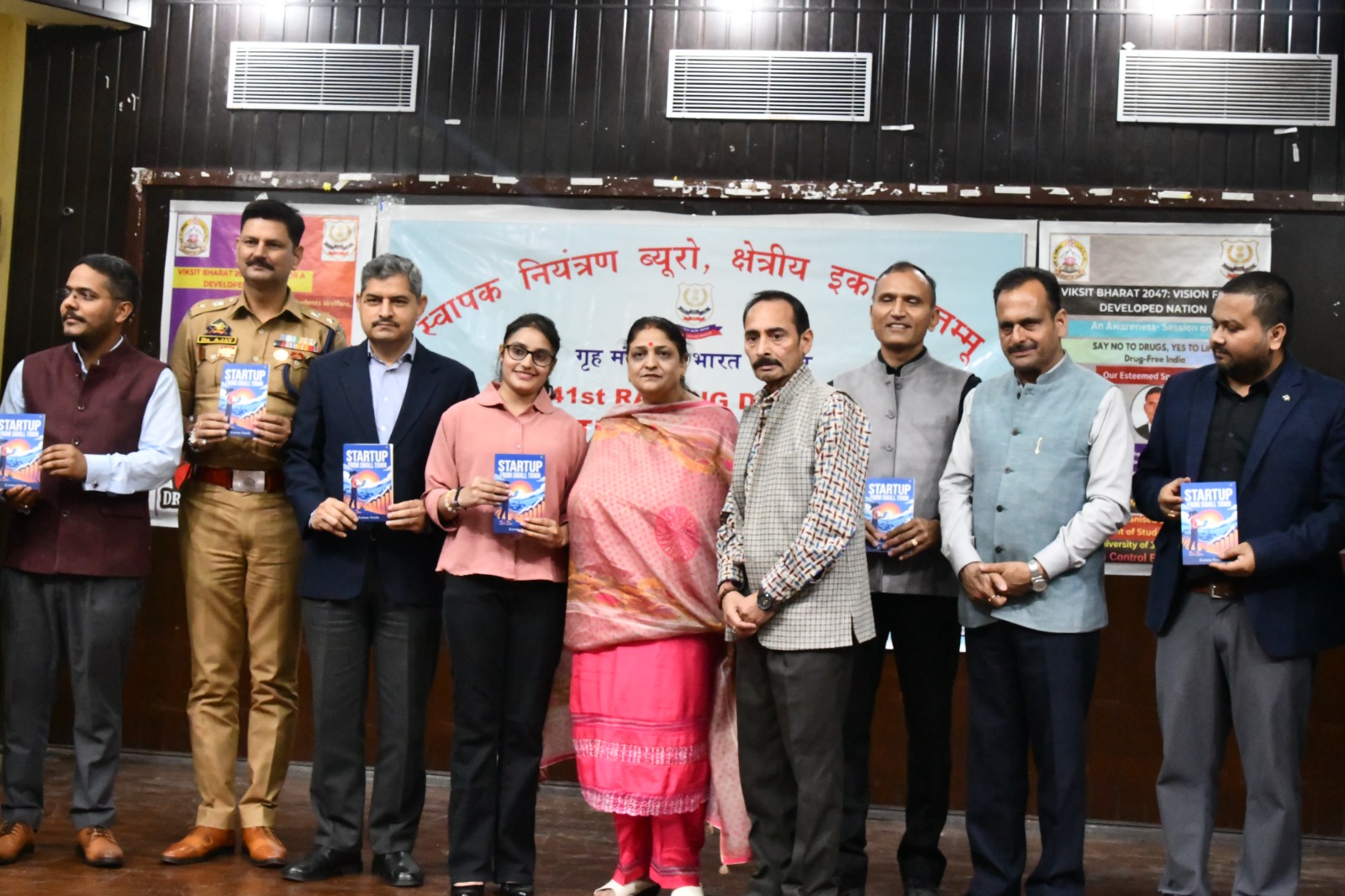
Jammu, March 18: In a significant initiative aimed at spreading awareness against the growing menace of substance abuse among the youth, the Department of Students Welfare, University of Jammu, in collaboration with the Narcotics Control Bureau (NCB), Jammu, organised a special awareness session on the theme “Say No to Drugs, Yes to Life - Drug Free India” at the University campus today. The programme was held to mark the 41st Raising Day of the Narcotics Control Bureau.
The program was organised under the overall supervision of Dean DSW, Prof. Prakash Anthal. Among others present on the occasion included Prof. Monika Chadha, Chairperson Campus Cultural Committee. ProfSarika Manhas, Co-Chairperson Campus Cultural Committee Prof. Seema Rohmetra, Director, The Law School and faculty members from various departments.
Shri Nagendra Singh Jamwal, Special Secretary in the office of Chief Secretary, UT of J&K, Col. Dheeraj Singh Jamwal of Ramachadra Mission, Dr. Ajay Sharma, JKPS, SP South Jammu, graced the occasion as Guest Speakers.
The session was conceived as an awareness-building initiative to sensitise young minds to the harmful physical, psychological, social and national consequences of narcotics and to encourage them to become active stakeholders in building a drug-free society.
Speaking on the occasion, Shri Nagendra Singh Jamwal, said that the youth of today stand at the heart of India’s journey towards 2047, as they will emerge as the country’s future decision-makers, policy planners and nation-builders. He observed that while India is moving ahead with the confidence of a growing economy and the strength of its demographic advantage, there are also disruptive forces that attempt to divert young minds from their constructive path. Referring to the changing social environment marked by shrinking attention spans, rapid lifestyle shifts and growing experimentation, he noted that drug abuse often enters the lives of young people in subtle forms, appearing as curiosity, fashion or temporary indulgence. He stressed that such a diversion of youthful energy weakens not only individuals and families, but also the collective national potential that India seeks to realise in the decades ahead.
Drawing from his experience in the field of higher education, Shri Jamwal underlined that the issue of substance abuse cannot be addressed through lectures alone and that universities must adopt more meaningful and engaging ways of connecting with students. He urged educational institutions to create interactive and experiential platforms through youth festivals, adventure activities, cultural programmes, heritage visits and wider student participation so that the energy, creativity and enthusiasm of the younger generation can be channelled in a positive direction. He said that awareness against drug abuse must be sustained and repeated with the same seriousness with which society has addressed other major public health concerns over time. Calling upon students to become alert, responsible and conscious citizens, he emphasised that the first and most powerful step in the fight against drugs is the courage to say no, adding that every young person has an important role to play as a frontline defender of society against the growing drug menace.
Addressing the gathering, Dr. Ajay Sharma, SP South, extended greetings to the Narcotics Control Bureau on its 41st Raising Day and said that the fight against drug abuse has emerged as a major priority under a coordinated whole-of-government approach at both the national and Union Territory levels. He noted that the campaign against narcotics is being pursued with seriousness through the concerted efforts of the J&K Police, Narcotics Control Bureau, Anti-Narcotics Task Force and other enforcement agencies working at multiple levels to dismantle the entire chain of drug trafficking, from supply and smuggling to local distribution networks.
Describing narcotics trafficking as a form of unconventional warfare, he observed that the drug trade is not merely a criminal activity but a grave threat to society and national security, as it weakens families, destroys the potential of youth. He stressed that the challenge of drug abuse must be met through stronger public awareness, vigilant community participation and a shared resolve to protect the younger generation from this destructive menace.
Adding a spiritual and mental wellness perspective to the programme, Col. Dheeraj Singh Jamwal of Ramachadra Mission conducted a calming meditation session for the students and participants. He introduced them to simple practices for managing stress, anxiety and inner restlessness, which often become underlying factors leading individuals towards unhealthy coping mechanisms, including substance abuse. The meditation session added a reflective and restorative element to the awareness programme and highlighted the importance of emotional balance, mental well-being and self-discipline in leading a healthy and meaningful life.
The book titled “Startup From Small Town”, authored by Karuna Nanda, was also released by the dignitaries on the occasion.
The event concluded with an Anti-Drug Pledge administered by Vasu Parik, during which students, faculty members and dignitaries collectively resolved to stay away from drugs and to encourage others to do the same.
Earlier in his welcome address, Kumar Manohar Manjul, SP, NCB Jammu, underlined the significance of observing the 41st Raising Day of the Narcotics Control Bureau through direct engagement with students and educational institutions. He expressed gratitude to the Department of Students Welfare, University of Jammu, particularly Prof. Prakash Antahal and his team, for collaborating in organising the awareness programme. Highlighting the role of the NCB as the country’s premier agency for regulating and monitoring narcotic and psychotropic substances, he noted that the challenge of drug abuse has today gone far beyond the boundaries of crime and has emerged as a major social concern affecting families, communities and society at large. Stressing the need to break the silence around the issue, he observed that awareness, dialogue and timely intervention remain among the most effective tools in preventing young people from falling into the trap of substance abuse.
The formal proceedings concluded with a heartfelt Vote of Thanks proposed by Dr. Nitan Sharma, Assistant Professor, The Law School, expressed gratitude to all the dignitaries, speakers, the NCB team, faculty members, and students for making the event a grand success.
The event was ably conducted by Ms. Suhasni and Anshika Gandhi.
The students and scholars from various teaching departments of the University attended the awareness session.