About University
About University
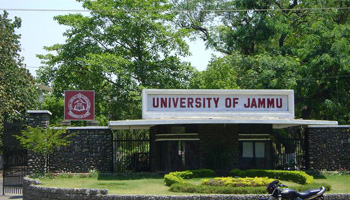
Cradled in the lap of mountains at the foothills of auspicious Trikuta, besides the river Tawi at an altitude of 1030 ft. is Jammu. This 'city of temples' has many places...
Cradled in the lap of mountains at the foothills of auspicious Trikuta, besides the river Tawi at an altitude of 1030 ft. is Jammu. This 'city of temples' has many places...


One of the emerging challenges faced by any higher educational institution is the development, application and maintenance of quality...
Two-Day International Seminar on “Dynamics of Democracy, Civil Society and Governance in South Asia” Begins at University of Jammu
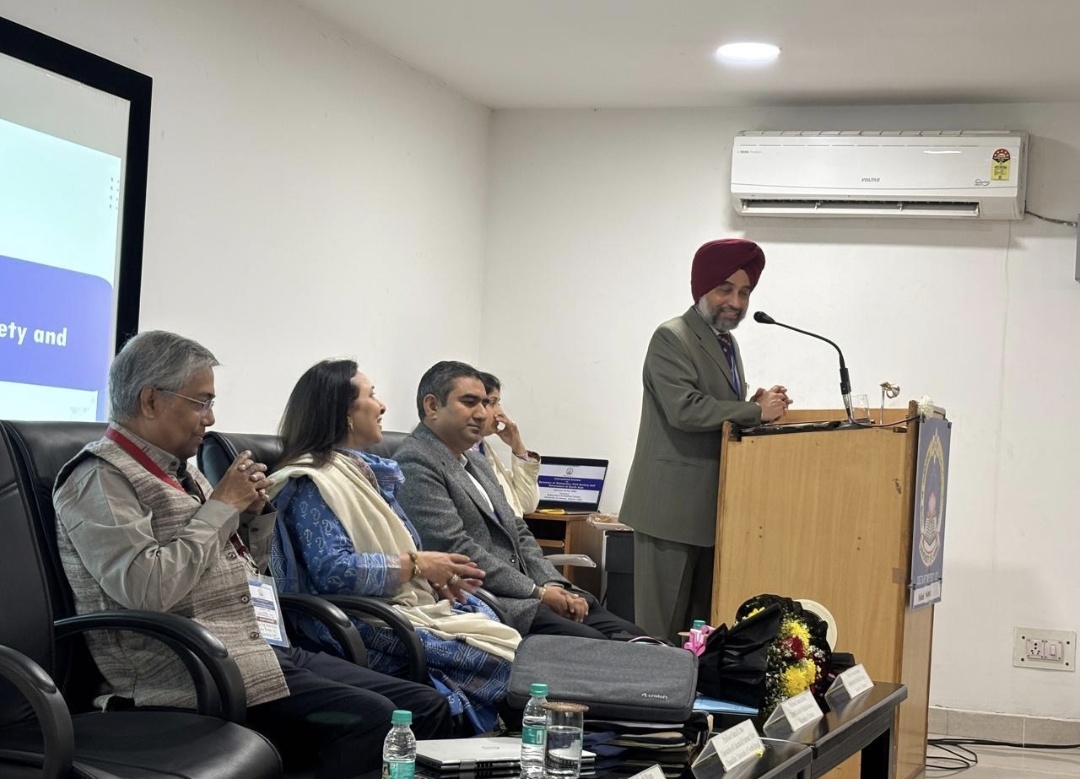
Jammu, February 23, 2026: A two-day international seminar on the theme “Dynamics of Democracy, Civil Society and Governance in South Asia,” organized by the Department of Political Science, University of Jammu, commenced today at the Seminar Hall of the Department of Environmental Sciences.
Eminent political scientist Dr. Samir K. Das, former Vice-Chancellor, University of North Bengal and currently Professor at the Department of Political Science, University of Calcutta, in his thought-provoking keynote address, examined the dynamic interplay between democracy, civil society and state institutions in South Asia, drawing attention to emerging trends, regional complexities and the need for inclusive governance frameworks.
Prof. Das further argued that populism, which seeks to enforce unity upon a social body marked by acute differentiation, operates within the deeply diverse social mosaic of South Asian countries. The creation of such unity, he observed, is perpetually contingent and momentary. It produces what may be termed “pure politics,” which refuses to be framed by civil society, the logic of reason, argumentation or rational deliberation.
Populist politics, he noted, can only be understood with reference to an unmitigated contingency and an extremely momentary configuration of forces set in motion by a populist leader. Populist politics invariably encounters uncertainty. Populist leaders are either replaced by other similarly populist leaders or bring the country to a breaking point, as witnessed in Sri Lanka, Bangladesh, Nepal and elsewhere. Very rarely does the end of populist politics inaugurate democratic politics.
Following the keynote address, Prof. Suman Jamwal, Dean, Faculty of Social Sciences, University of Jammu, delivered the presidential address during the inaugural session. In her address, Prof. Jamwal highlighted the value of democratic political systems and the role of civil society in enhancing the quality of governance in South Asia within a historical context. She underscored the need for critical academic engagement with the changing socio-political landscape of the region.
Prof. Jamwal further described India as the mother of democracy, which has long served as a meeting ground of ideas, institutions and political traditions. From a historical perspective, she noted, this may be understood as recognition of deep-rooted traditions of deliberation and ethical governance. She added that modern constitutional democracy is a contemporary institutional achievement; yet, its ethical foundations—constitutionalism, moral restraint and plural coexistence—have deeper resonances in this civilizational space.
Earlier, Prof. Baljit Singh Mann, Head, Department of Political Science and Convener of the Seminar, formally welcomed the distinguished guests and participants and introduced the theme of the seminar to the audience. Prof. Mann opined that democracy and civil society are closely intertwined, with governance being their byproduct, and that democracy remains vibrant only if civil society is truly civil. He stated that civil society has contributed to mobilization and political change in South Asian states, and the end of colonialism was its greatest achievement. Prof. Mann further argued that, owing to structural reasons, democracy has witnessed roadblocks in many South Asian countries.
The seminar will feature five technical sessions over two days, covering a wide range of issues related to democratic processes, civil society activism, public policy, regional cooperation and governance challenges in South Asia. More than 28 scholars from Indian and foreign universities and colleges are participating in both in-person and virtual modes, reflecting the seminar’s international and interdisciplinary character. Among the prominent foreign delegates are Prof. Kazi S.M. Khasrul Alam Quddusi and Dr. Mahmudur Rehman from the University of Chittagong, Bangladesh; Dr. Seema Shekhawat from the University of North Florida, USA; and Dr. Nisanka Sanjeewani Ariyarathne from the University of Ruhuna, Sri Lanka. National delegates include distinguished academicians such as Prof. Karori Singh from the University of Rajasthan, Jaipur; Prof. Mathew Joseph C. from Jamia Millia Islamia, New Delhi; Prof. Ajmer Singh Malik and Dr. Vikas from the University of Kurukshetra, Kurukshetra; Prof. Ambrish Dhaka from Jawaharlal Nehru University, New Delhi; Prof. A. Venkatraman from Veer Narmad South Gujarat University; Prof. Y. Pardhasaradhi from Osmania University, Hyderabad; Prof. Rajpal Budania from the University of Allahabad, Prayagraj; Prof. Amarjit S. Narang from Indira Gandhi National Open University, New Delhi; Dr. Dhananjay Tripathi from South Asian University, New Delhi; and Dr. Davinder Singh and Dr. Gurvel Singh Malhi from Khalsa College, Amritsar. In addition, many local participants from the University of Jammu and various affiliated colleges are participating in the seminar. Through both in-person and virtual modes, these scholars will present their research papers and actively engage in deliberations across various thematic technical sessions. The seminar is expected to foster meaningful academic dialogue and generate policy-relevant insights on the evolving dynamics of democracy, civil society and governance in South Asia.
Prof. Suneel Kumar presented the vote of thanks, expressing gratitude to the keynote speaker, chair, delegates and the organizing committee for their valuable contributions. The proceedings of the inaugural session were conducted by Dr. Shaveta Chowdhary, who ensured the smooth conduct of the programme.
The inaugural session was attended by faculty members from various departments of the University, including Prof. S. K. Pandey, Prof. Lalit Sen, Prof. Dipankar Sen Gupta, Dr. Sandeep Singh and Dr. Mohd. Monir Alam. Faculty members Dr. Ellora Puri, Dr. Mool Raj and Dr. Vishavjit Singh Chib, along with research scholars and students of the Department, also attended the inaugural session.